You can always trust IMore.
Our team of Apple experts has years of experience testing all kinds of technology and gadgets, so you can be sure that our recommendations and critiques are accurate and helpful. Learn more about how we test.
I’ve been on a tear lately when it comes to reviewing DACs, and I have to say that my time with the Zen DAC 3 was fun. It’s a beautiful machine that looks great on the desk, with a sound to match.
You get a lot for $229, and my only gripe is that I’d like to see an XSpace analog mode included for IEMs and headphones whose soundstage is a bit lacking.
iFi Zen DAC 3: Price and availability

The iFi Zen DAC 3 is currently available direct from ifi-audio.com or Amazon for $229. It hasn’t been on sale since it’s been on Amazon, so if you’re in the market looking at this, there’s no better time to buy it.

The price is pretty solid for what you get, as competing devices don’t have the same number of features at this price point. If you want more, you’ll have to pay more, generally speaking.
iFi Zen DAC 3: Build and deploy

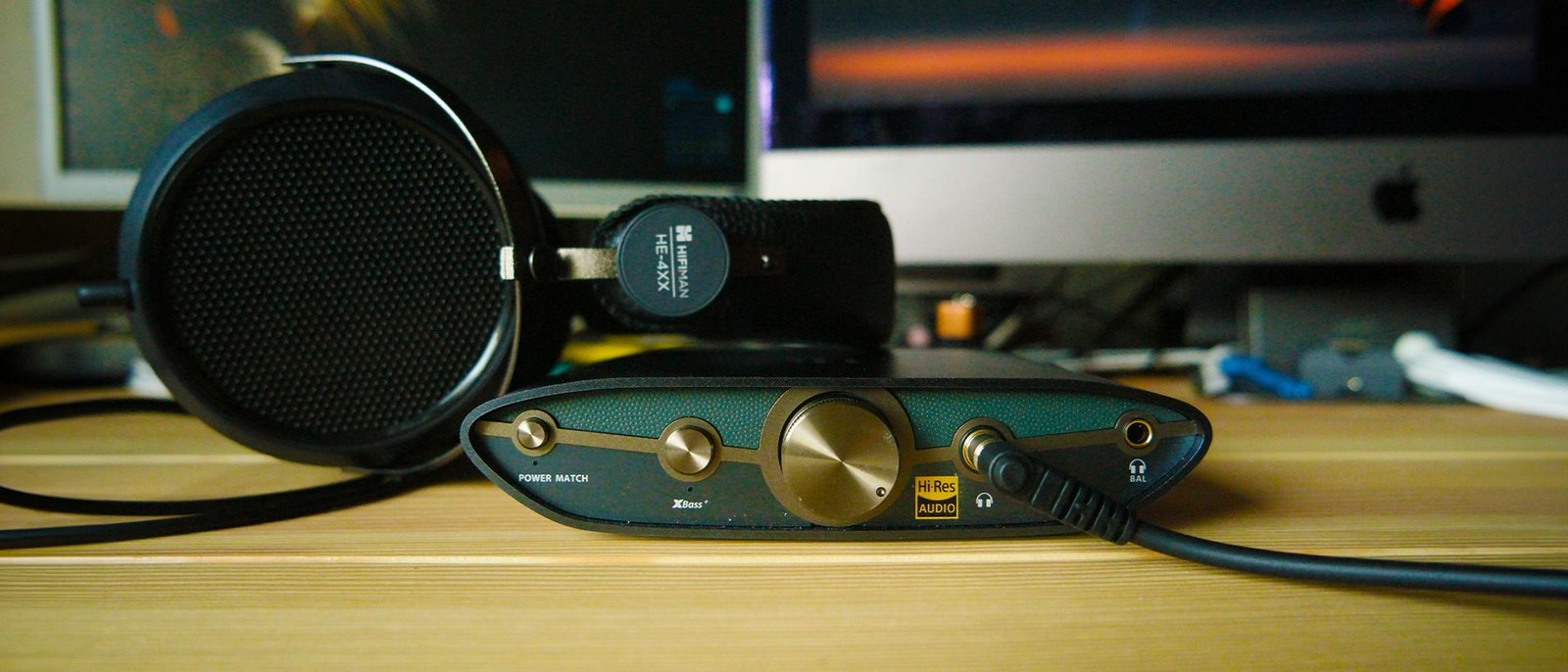
Zen DAC 3 is made of aluminum and has a solid weight when lifted. All buttons provide reassuring feedback, the volume knob is smooth and beautifully machined, and the ports are tight and well made. There are a lot of small details to appreciate on the Zen DAC 3, from the various textures of brushed or dimpled metal surfaces to the Sunlit Bronze accents, buttons and knobs, to the dust covers on the RCA inputs on the back of the device.
Many design elements have been well thought out and it shows.
There are rubber feet on the bottom of the device, another nice detail that saves the finish of the bottom part. It’s clever because these feet provide extra grip on the underside when plugging/unplugging cables. Plus, the unit is so light that these rubber feet will keep the DAC from moving around on your desk due to cable movement if you’re fiddling with your tunes.
Finally, when we talk about “build”, the inputs/outputs are placed intuitively. There’s I/O on the back of the Zen DAC 3, but it makes sense to have outputs there because they connect to larger external devices than a pair of headphones.
iFi Zen DAC 3: Features

The Zen DAC 3 has two headphone jacks on the front. One balanced 4.4mm input pushes 390mW @ 64ohms and one 6.3mm input pushes 210mW@32ohms. You get a 3.5mm to 6.3mm adapter inside the box, as there is no input for one of the most common types of audio interface. There are also Power Match and XBass Plus buttons on the front. The Power Match provides a gain boost for power-hungry headphones, while the XBass is a typical iFi analog bass booster.
That beautiful analog volume knob on the front also doubles as an audio format LED that lights up in seven different colors to indicate the audio format and sample rate being received from the audio source.
On the back of the unit you will find a USB-C input with surge protection, a DC 5V input, another symmetrical 4.4mm output (2V-6.2V max variable, 4.2 fixed) and RCA outputs (1V-3.3V max variable, 2.1V fixed). Their output impedance is 200 ohms and 100 ohms. 4.4mm and RCA outputs allow you to connect this DAC/Amp as a preamplifier to another amplifier or powered speakers. Since you have these I/O options, it was also smart for iFi to add a fixed or variable output gain switch on the back of the unit.
All these outputs and their functions are powered by a bit-perfect DSD and DXD Burr Brown DAC that supports PCM up to 768kHz, DSD up to DSD 512 and full MQA decoding.
iFi Zen DAC 3: Sound quality

The sound quality ranks the iFi GO blu and GO bar Kensei as my favorite DACs, both use Cirrus Logic chipsets, but the Zen DAC 3 uses a Burr Brown DAC whose sound quality differs from the previous two. The word that best describes the Burr Brown chip is “smooth.” Its tuning is not as “transparent” as the Kensei, but it makes the listening experience with the Zen DAC 3 fun and engaging.
One of my regular test tracks, “Moanin’,” has some horn sections that can be quite harsh, but the Zen DAC 3 makes these sections easy to listen to as its smooth top end softens the shrill sounds of the brass.
If you want a break from a smoother curve in your lower frequencies, the XBass Plus analog mode restores the growl back to bass and sub-bass. But this isn’t some muddy compressed digital filter. Low end boost is tight and controlled. Enabling this feature makes listening to high-bass tracks quite enjoyable, especially if you’re using flatter headphones like a pair of Planar Magnetics. Without XBass Plus active and using more balanced or flat headphones or IEMs, songs like Skrillex’s “Mumbai Power” with deep bass and sub-bass lose a bit of bite.
Despite being smooth, you still get great stereo imaging with a wonderful feel for instruments and their layering in the soundscape. And those images will always be nice and full thanks to the Power Match function, which increases the gain and provides enough output for my Sennheiser HD660S2 and HiFiMan HE-4XX, so depending on the track, I never needed to increase the analog volume above 50% to 75% of its maximum. With my IEMs, with Power Match turned off, I only need to turn the volume down to 25% of its maximum output for a nice, full sound.
The Zen DAC 3 is an all-around great DAC to plug into your laptop or desktop computer for a warm, smooth sound that doesn’t compromise mid-range vocals or allow harsher sounds in the higher frequencies to become harsh. I would definitely categorize it as “fun and entertaining” when it comes to DAC and active listening. Perfect for listening to music at the table or watching movies.
iFi Zen DAC 3: The Competition

There are several alternatives to the Zen DAC 3, but there are trade-offs. Many of them use different USB standards, making connecting mobile phones a pain. For example, the Fiio K7 and Topping DX3 Pro Plus are both great options, but use USB-B connections. On the other hand, you get coaxial and optical connectivity. The DX3 Pro Plus even has a built-in screen.
Then there’s the Schiit Magni, which offers a USB-C connection. Check out the internal DAC option which will run you $189 and give you many of the features of the Zen DAC 3. The downside to this option is the headphone cable connection options. You only get one ¼”, or 6.35mm, single-ended jack on the front. There’s no balanced 3.5mm jack, so you’ll need to use an adapter. It’s worth checking out.
iFi Zen DAC 3: Should you buy it?

You should buy the Zen DAC 3 if…
- You want a capable laptop/mobile phone/desktop DAC
- You want a DAC that can power headphones or powered speakers
- You want quality without breaking the bank
You should not buy the Zen DAC 3 if…
- You want a Bluetooth connection
- You want a coaxial/optical audio connection
For a semi-mobile DAC that produces smooth sound and has great connectivity options, the Zen DAC 3 is well worth the price! You get a beautiful piece of hardware, a smart feature set, and plenty of power to drive almost any pair of headphones or IEMs you plug into it. XBass Plus makes DAC something even bass heads can get into!
The beauty of the Zen line is that iFi has just released a few new versions that between the three should cover the needs of just about anyone looking for a semi-mobile desktop DAC.

Smooth desktop sounds!
iFi’s Zen DAC line has been a hit with consumers, and this third generation iteration should be as well. Solid I/O capabilities coupled with fun desktop audio at a decent price make it a great choice for high definition desktop enjoyment.
About The Author